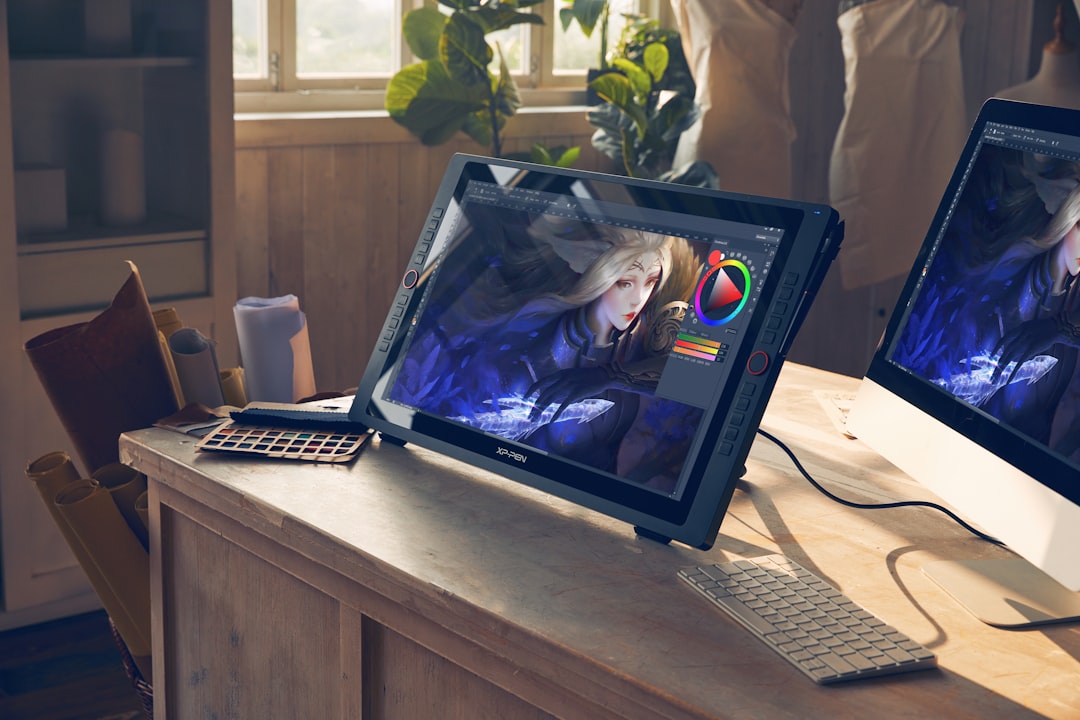
8 Easy Digital Art vs Traditional Art Projects for Stunning Work
The whole digital art vs traditional art argument is mostly nonsense.
British artists love fighting about this. Go to any art forum or sit in any pub near an art college. You will find someone calling digital art “not proper art” or traditional art “obsolete.”
Neither is right. Both are missing the point. Understanding digital art vs traditional art as complementary, not oppositional, is the key to growing as an artist in 2026.
Here is the truth: digital art vs traditional art is not a battle. It is a toolbox.
You pick the right tool for the right job. Sometimes that is a graphite stick from Cass Art. Sometimes that is an iPad with Procreate.
The digital art vs traditional art choice depends entirely on what you are trying to make and how you work best.
I have spent over a decade making both kinds of art. I have sold traditional paintings at craft fairs in Bristol. I have sold digital prints online.
I have taught beginners in Manchester who could not draw a stick figure. I have watched them fall in love with one side of digital art vs traditional art — or both.
This guide is written for the United Kingdom. UK data. UK spelling. UK resources. No Americanisms.
📚 More from the Pengess Education Hub:
Let us go.
What Is Traditional Art? Understanding One Side of Digital Art vs Traditional Art
Before we compare anything in the digital art vs traditional art debate, we need to answer one question.
What is traditional art? Here is the simple version: art made with physical materials that you can touch.
Pencil on paper. Oil on canvas. Charcoal, clay, watercolour, ink, pastels, wood, stone. If you hold it in your hand and make a mark, that is traditional art.
In the digital art vs traditional art conversation, traditional art is the side with centuries of history and physical presence.
According to the UK government’s Department for Culture, Media and Sport, 90% of English adults participated in at least one arts activity in 2022-2023.
That is nearly every adult in England. Why? Because traditional art is accessible. A child in Sheffield can draw with a stick in the mud.
What is traditional art in practice? It is messy. It is slow. It forces you to live with your mistakes. There is no undo button.
You mess up a watercolour wash on Bockingford paper? You sigh, make a cuppa, and try again or work around it.
Here is what most guides won’t tell you about what traditional art is: it teaches patience. Real patience. Not the kind where you wait for a file to load.
The kind where you stare at a half-finished painting for two hours in your Glasgow studio because you are scared to ruin it.
That is valuable. That is why digital art vs traditional art is not a simple choice. Both have strengths.
Quick Facts About Traditional Art (UK Context)
| Fact | Source |
|---|---|
| 90% of English adults did an arts activity (2022-2023) | UK Gov, Dept for Culture, Media and Sport |
| Global art market value (2025) | The Business Research Company |
| UK is a major art market hub | The Business Research Company |
| Painting remains the dominant category worldwide | The Business Research Company |
Traditional art is not dying in the UK. It is growing. Slowly, steadily, like a good oil painting drying in a cold British studio.
What Is Digital Art? The Other Half of Digital Art vs Traditional Art
Now, let us answer the second question in the digital art vs traditional art comparison.
What is digital art? Art made with digital tools. A tablet. A stylus. A computer. Software like Procreate, Photoshop, Krita, or Clip Studio Paint.
On the digital art vs traditional art spectrum, digital art represents speed, flexibility, and infinite reproducibility.
But here is the part that makes traditional artists angry: what digital art includes is the same fundamental skills as traditional art.
Proportion. Perspective. Colour theory. Value. Composition. Light. All of it transfers.
The difference? Layers. Undo buttons. Infinite colours. No drying time. No wasted paper.
According to the Art Basel and UBS Survey of Global Collecting, digital art now ranks third in total spending among high-net-worth collectors.
It sits behind only painting and sculpture. And 51% of wealthy collectors purchased a digital artwork in 2024 or 2025.
Let me repeat that. More than half of rich collectors bought digital art recently.
When people discuss digital art vs traditional art as a financial decision, digital art is no longer the underdog.
What is digital art in the real world? It is a job. A serious one. Concept artists for Pinewood Studios use digital. Illustrators for Penguin Books use digital.
Animators at Aardman? They use digital for some parts too.
Art Basel launched a section called “Zero 10” dedicated entirely to digital and new media art. At Miami Beach, Beeple showed robotic dogs that excreted NFTs. They sold out in five hours.
So, when someone asks what digital art is and implies it is not “real” art? They are just wrong. Politely but firmly wrong.
The digital art vs traditional art hierarchy does not exist in professional practice.
Quick Facts About Digital Art
| Fact | Source |
|---|---|
| Digital art ranks 3rd in collector spending | Art Basel & UBS Survey |
| 51% of wealthy collectors bought digital art (2024-2025) | Art Basel & UBS Survey |
| The digital art market is growing faster than traditional art | Art Basel CEO Noah Horowitz |
| “No longer at the margins” | Art Basel |
Digital Art vs Traditional Art — 7 Differences That Actually Matter
Enough definitions. Let us compare. Digital art vs traditional art comes down to seven real differences. Not fake ones. Not “which is more artistic.” Practical stuff.
1. Cost (in GBP, because we are in the UK)
Traditional: You buy supplies forever from Cass Art, Hobbycraft, or Jackson’s Art. A good brush costs £15-20. A tube of Cadmium Red? £25-30. Canvas? £10-20 each.
Digital: One upfront hit. A decent tablet costs £80 to £400. Procreate is £9.99 one time. Adobe Creative Cloud is about £20/month. After that? Almost free.
My take on digital art vs traditional art: Digital wins long-term. Traditional wins if you already own a pencil.
2. Learning Curve
Traditional: Feels natural. Pencil touches paper. Your brain already knows this from primary school.
Digital: You learn two things at once. Art fundamentals AND software. Menus. Layers. Blending modes.
According to Wikipedia, advanced digital techniques “may require a steeper learning curve of computer technical skills.”
My take: Traditional is easier to start. Digital takes longer to feel natural.
3. Mistakes and Fixes
Traditional: You mess up. You sigh heavily. Then you either paint over it or bin it.
Digital: Undo. Ctrl+Z. God’s gift to clumsy artists.
My take: Digital wins. Not even close.
4. Physical Feeling
Traditional: You feel everything. The drag of a dry brush. The smell of linseed oil.
Digital: Glass and plastic. Smooth. Cold.
My take: Traditional wins for soul. Digital wins for convenience.
5. Sharing and Selling
Traditional: You finish. Then you photograph it. Then you edit. Then you post. Extra steps.
Digital: You finish. You export. You post. Thirty seconds.
My take: Digital wins for social media.
6. Storage (London flat problem)
Traditional: Paintings need walls. Canvases need crates. A nightmare in Zone 2.
Digital: Files. A £40 hard drive holds tens of thousands of artworks.
My take: Digital wins for space. By a mile.
7. Uniqueness
Traditional: One original. Scarcity = value.
Digital: Infinite perfect copies. But NFTs have created new scarcity models.
My take: Traditional still leads here for most collectors. But the gap is closing.
Traditional Art Ideas for Your Digital Art vs Traditional Art Journey
If you are exploring digital art vs traditional art, do not skip the traditional side. Try these traditional art ideas.
5 Traditional Art Ideas for UK Artists
1. Blind contour drawing: Look at an object in your kitchen. Never look at your paper. Draw one line. The result looks insane. That is the point.
2. Coffee stain painting: Brew strong Yorkshire Tea or cheap instant coffee. Paint with it. The brown tones are warm and unpredictable.
3. Collage self-portrait: Cut magazines, fabric scraps, old letters. Assemble them into a face. No drawing skill required.
4. Charcoal on newspaper: Cheap charcoal sticks from The Works cost £2. Old newspaper is free. The texture is beautiful.
5. Ink blowing: Drop ink on paper. Blow through a straw. Watch it spread. Add pen details after it dries.
These traditional art ideas work because they are low-pressure. You cannot fail at blowing ink around. That is the secret.
Digital Art Ideas for When You Choose the Digital Side
Now, let us talk digital art ideas. If digital art vs traditional art has you leaning toward a screen, here is where to start.
5 Digital Art Ideas That Teach You Something
1. Fan art mashup: Take two characters from different shows. Draw them interacting. Great for learning character design.
2. Isometric room: Draw a tiny bedroom in 3D isometric. Teaches perspective without vanishing points.
3. Glitch effect portrait: Duplicate your layer. Shift it sideways. Change the blend mode. Instant glitch.
4. Day and night split scene: Same landscape, two times of day. Great for lighting and colour practice.
5. Emoji redesign: Take the crying laughing emoji. Redesign it in your style. Simple shape language practice.
These digital art ideas show what digital art does best: speed and iteration. In the digital art vs traditional art comparison, digital wins for experimentation.
Digital Art Ideas for Beginners (No Tablet? No Problem)
Here is where most guides fail you. They assume you own an iPad Pro, an Apple Pencil, and Adobe Creative Cloud. You probably do not. That is fine.
6 Digital Art Ideas for Beginners (Zero Pressure)
1. Pixel art: Use Piskel. Free and runs in your browser. Make a tiny ghost. Teaches you to work with limits.
2. Vector blob creature: Use Vectr or Inkscape. Both free. Click and drag random shapes. Turn them into a creature.
3. Mood palette: Pick three colours that feel like an emotion. Paint random shapes using only those colours.
4. Trace your own sketch: Draw something on paper. Take a photo. Import into any free drawing app. Trace it digitally.
5. One-layer challenge: No layers. Forces you to work like traditional art. Great for building confidence.
6. Shape animal: Use only circles and triangles. Make a fox. Or a bird. Works every time.
The University of Edinburgh offers a free beginner toolkit for creating visual art from personal data using p5.js.
Their exact words: “No prior coding experience is required”.
These digital art ideas for beginners are how I started. No fancy setup. No pressure. Just making stupid little things that made me happy.
What the Data Actually Says About Digital Art vs Traditional Art
Let me give you real numbers. Not opinions. Not what feels true. What is actually happening in the digital art vs traditional art market.
Global market size: The global art market was worth $552.97 billion in 2025. It will hit $739.99 billion by 2030. Growth rate: 6.1% annually. Source: The Business Research Company.
UK arts participation: According to the UK government’s Participation Survey 2022-2023, 90% of English adults participated in at least one arts activity. That is up 2% from the previous year.
Digital adoption: According to the Art Basel and UBS Survey, 51% of wealthy collectors bought digital art in 2024 or 2025.
Digital art now ranks third in spending behind only painting and sculpture.
UK art market: The UK is one of the world’s largest art markets, second only to the US. London remains a global hub for both traditional and digital art.
Here is what the data says about digital art vs traditional art: Both are growing. Traditional is not dying. Digital is not a fad. They are merging.
Which Side of Digital Art vs Traditional Art Should You Learn First?
After all this digital art vs traditional art comparison, you want an answer.
Here is mine.
Learn traditional art first if:<br
Leave a Reply
You must be logged in to post a comment.