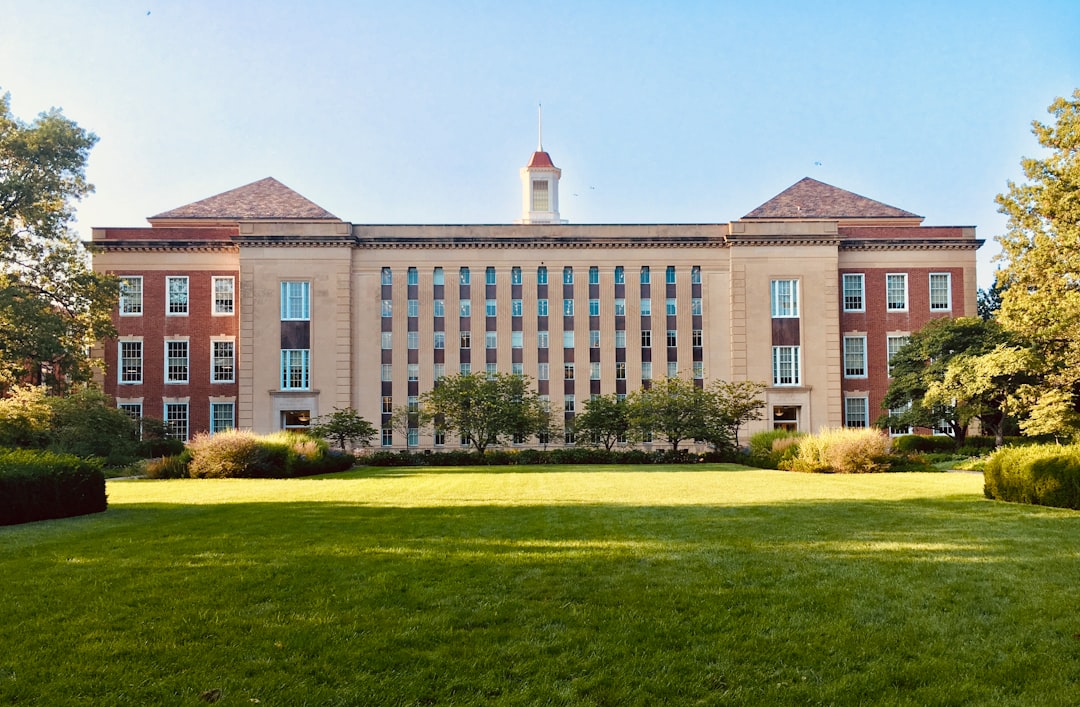
The Imperial College London acceptance rate is approximately 14%. That means only 14 out of every 100 applicants receive an offer.
This makes Imperial one of the most selective universities in the United Kingdom, alongside Oxford and Cambridge. But a low acceptance rate does not tell the whole story. You also need to understand its world-class rankings, its campus culture, and the career opportunities that come with an Imperial degree.
Imperial College London was founded in 1907 and has grown into a global powerhouse in science, engineering, medicine, and business. With over 19,000 students enrolled, 60% of whom come from outside the UK, Imperial is truly international.
This guide covers everything you need to know: the exact Imperial College London acceptance rate by programme, how to visit via an Imperial College London open day, current Imperial College London ranking positions across major league tables, a tour of the Imperial College London library system, and the unique relationship between the university and Imperial College Healthcare NHS Trust.
Fact #1: Imperial College London is the only university in the UK that focuses exclusively on science, engineering, medicine, and business.
Let us dive into why Imperial is consistently ranked among the world’s best.
Imperial College London Acceptance Rate – How Hard Is It Really?
The Imperial College London acceptance rate sits at 14% overall. But this number varies significantly by department and programme.
According to the 2026 admissions guide, the university receives far more qualified applicants than it has places available. Engineering and Natural Sciences programmes typically attract the most competition and may have even lower acceptance rates than the institutional average of 14%.
3: What Does a 14% Acceptance Rate Actually Mean?
A 14% acceptance rate means Imperial is among the top 5 most selective universities in the UK, comparable to Oxford and Cambridge.
To put this in perspective, the acceptance rate at most UK universities ranges from 70% to 90%. At Imperial, you are competing against the brightest students from around the world. The typical successful applicant will have:
-
Top A-level grades (AAA to A*AA for most programmes)
-
Strong scores on admissions tests (like the ESAT for engineering or UCAT for medicine)
-
A compelling personal statement that shows genuine passion for their subject
-
Excellent performance at interview (for many programmes)
Fact #2: The Imperial College London acceptance rate for international students is slightly lower than for UK students because of the high volume of global applicants. 60% of Imperial’s students come from outside the UK.
How to Improve Your Chances Despite the Low Acceptance Rate
A strong academic record is necessary but not sufficient for admission. The most competitive applicants demonstrate a clear intellectual narrative.
Here is what admissions tutors look for beyond grades :
-
Extracurricular depth: Not just listing activities, but showing genuine commitment and achievement
-
Compelling personal writing: Go beyond reciting your achievements. Explain why you love your subject
-
Preparation for admissions tests: Many programmes require specific tests. Start preparing early
-
Interview performance: Practice speaking about your subject with teachers or mentors
The admissions guide notes that successful applicants should “apply to a balanced list of institutions at varying selectivity levels, while investing the greatest preparation into their Imperial College London application”.
Fact #3: According to the university, a significant proportion of Imperial undergraduates go on to complete postgraduate study—including master’s degrees, doctoral research, and MBA programmes—either at Imperial or at other world-leading universities.
Imperial College London Ranking 2026 – Global and UK Positions
Imperial College London’s ranking has reached historic highs in 2026. The university is now ranked #2 in the world by QS and #8 by THE.
Here is the complete breakdown of Imperial College London’s ranking across all major league tables for 2025-2026.
What Is Imperial’s Global Ranking in 2026?
Imperial College London ranking places it among the top 2–30 universities globally, depending on the ranking system.
| Ranking Organisation | Imperial’s Position | Year | Key Insight |
|---|---|---|---|
| QS World University Rankings | #2 in the world | 2026 | Highest ever; only behind MIT |
| Times Higher Education (THE) | #8 in the world | 2026 | Top 10 globally; highest among pure STEM unis |
| US News Best Global Universities | #11 in the world | 2025 | Engineering/CS/Clinical Medicine top 5 |
| ARWU (Shanghai Ranking) | #26 in the world | 2025 | Focuses on research output and Nobel prizes |
Fact #4: The Imperial College London ranking of #2 in the QS World University Rankings 2026 is the highest ever achieved by a UK university outside of Oxford and Cambridge. Imperial is now the top-ranked university in London and the highest-ranked pure STEM university in the world.
How Does Imperial Compare to Oxford and Cambridge?
Imperial College London ranking consistently places it behind Oxford and Cambridge in some tables (THE, ARWU) but ahead of both in QS 2026.
The QS 2026 ranking placed Imperial at #2 globally, above Oxford (#3) and Cambridge (#5). This reflects Imperial’s exceptional performance on employer reputation and international research collaboration.
The THE ranking places Imperial at #8 globally, still within the world top 10, though Oxford (#1) and Cambridge (#5) rank higher in that specific table
The key takeaway: Imperial College London’s ranking is elite by any measure. Whether #2 or #8, you are looking at a top-10 global university.
Which Subjects Does Imperial Rank Best In?
Imperial’s subject-specific rankings are even more impressive than its overall position.
According to the rankings data :
-
Engineering: Multiple disciplines rank in the global top 10
-
Computer Science: Among world leaders, with strong links to the tech industry
-
Clinical Medicine: Top 5 in the world (US News)
-
Natural Sciences: Physics, Chemistry, and Mathematics are all globally renowned
Imperial is also a leader in emerging fields like artificial intelligence, clean energy, biomedical engineering, and data science.
Imperial College London Open Day – How to Visit and What to Expect
Imperial College London’s open day events are your best opportunity to experience the campus, meet academics, and ask questions before applying.
Attending an open day is strongly recommended. It shows genuine interest and helps you decide if Imperial is the right fit for you.
When Are the Next Imperial College London Open Days?
Imperial typically holds open days in the summer (June-July) and autumn (September-October) each year.
For the 2026 entry, prospective students should monitor the official Imperial website for specific dates. The UCAS application deadline for most undergraduate programmes is 22 January.
What you can expect at an Imperial College London open day :
-
Campus tours of the South Kensington hub (including the library and labs)
-
Subject-specific talks from faculty members
-
Q&A sessions with current students
-
Admissions and funding advice workshops
-
Tours of student accommodation
If you cannot attend an in-person open day, Imperial offers virtual open day options and online information sessions throughout the year.
What Is the South Kensington Campus Like?
Imperial’s main campus is in South Kensington, one of London’s most prestigious and beautiful neighbourhoods.
The campus is adjacent to:
-
The Natural History Museum
-
The Science Museum
-
The Victoria and Albert Museum
-
Hyde Park and Kensington Gardens
This location gives Imperial students unparalleled access to world-class cultural and green spaces. The campus itself is compact but well-equipped, with modern teaching facilities, research labs, libraries, and social spaces.
Fact #5: For students who need additional English support, Imperial offers a 3-week pre-sessional English course running from 1–18 September 2026, with a tuition fee of £2,580. The application deadline is 20 July 2026
Imperial College London Library – Complete Guide to Campus Libraries
The Imperial College London library system spans multiple campuses, offering 24-hour access, quiet study spaces, and extensive collections.
Imperial has several libraries, each serving different disciplines and campuses. Here is your complete guide.
Where Are the Imperial College London Libraries Located?
Imperial College London library facilities exist on multiple campuses, including South Kensington, Charing Cross, and St Mary’s.
The main library is at the South Kensington campus (Central Library). However, medical and clinical students also use campus libraries at hospital sites.
Charing Cross Campus Library :
-
Located on the 2nd floor of the Reynolds Building
-
24-hour opening (except closed overnight Friday 21.00 to Saturday 10.00)
-
Staffed Monday-Friday 09.00-21.00, Saturday 10.00-17.00
-
Approximately 270 study spaces, 30 PCs, three printer-copiers
-
Features: silent, whisper, and collaborative study zones; six collaborative booths (seats 4); four solo pods; three group study rooms (seats up to 10)
-
Access: No entry without a valid Imperial ID card when staff are not on-site
St Mary’s Campus Library :
-
Located on the 2nd floor of the Mint Wing, St Mary’s Hospital (W2 1NY)
-
Open Monday-Friday 09.00-21.00, Saturday 13.30-17.00
-
Features: study desks (including height-adjustable), quiet booths (bookable), ICT suite with 16 PCs, Library of Things (wellbeing items and assistive technology)
-
Unique feature: Quiet booths with adjustable mood lighting and artwork by Yuko Shiraishi
-
Note: The Mint Wing is publicly accessible until 20.00, after which it becomes card-controlled. Entry via Entrance C, H, or Winsland Street
What Study Spaces Are Available in Imperial College London Libraries?
Imperial College London library spaces range from silent study zones to collaborative booths and bookable group rooms.
| Library | Study Spaces | Bookable Spaces | 24-Hour Access |
|---|---|---|---|
| Central Library (South Kensington) | Extensive | Yes | Yes |
| Charing Cross | 270 spaces + 30 PCs | 6 booths, 4 pods, 3 rooms | Yes (mostly) |
| St Mary’s | Study desks, quiet booths, cosy corner | 2 quiet booths | No |
Bookable spaces at Charing Cross :
-
Collaborative booths (6): Seat up to 4 people, power/USB. Book up to 4 hours/day
-
Solo pods (4): For online meetings or speech-to-text software. Solo occupancy only. Book up to 2 hours/day
-
Study rooms (3): Seats up to 10, presentation screen, Imperial PC. Book up to 2 hours/day, 3 times/week.
Priority desks for disability support: Students registered with the Disability Advisory Service can book priority desks at Charing Cross
NHS user access: St Mary’s and Charing Cross libraries serve both Imperial students and Imperial College Healthcare NHS Trust staff. NHS users can book quiet booths at St Mary’s by phone or email.
Fact #6: The Imperial College London library at Charing Cross is open 24 hours most days, with six bookable collaborative booths and four solo pods for focused work or online meetings
Imperial College Healthcare NHS Trust – The University’s Clinical Partner
Imperial College Healthcare NHS Trust is one of the largest NHS trusts in England, and it is the primary clinical partner of Imperial College London.
This partnership is crucial for medical students, clinical researchers, and healthcare professionals. The trust operates five major hospitals across London.
What Hospitals Are Part of Imperial College Healthcare NHS Trust?
Imperial College Healthcare NHS Trust includes Charing Cross Hospital, Hammersmith Hospital, St Mary’s Hospital, Queen Charlotte’s & Chelsea Hospital, and Western Eye Hospital.
The trust provides acute and specialist services, including:
-
24/7 accident and emergency at Charing Cross Hospital
-
Hyper-acute stroke unit at Charing Cross
-
Major trauma centre at St Mary’s Hospital
-
Specialist maternity services at Queen Charlotte’s & Chelsea
Key locations for Imperial students :
-
Imperial Clinical Research Facility – Hammersmith Hospital Campus (Du Cane Road, W12 0HS). Used for clinical trials and research studies.
-
Chelsea and Westminster Hospital – 369 Fulham Road, SW10 9NH. Hosts quarantine units and research facilities.
How Does Imperial College Healthcare NHS Trust Support Students?
Imperial College Healthcare NHS Trust provides clinical placement opportunities for medical and nursing students, plus research access for PhD candidates.
Medical students at Imperial complete clinical rotations across trust hospitals. This gives them real-world experience in London’s busy healthcare system.
The trust also hosts cutting-edge research. For example, the NIHR Imperial Clinical Research Facility at Hammersmith Hospital is where human challenge trials and other clinical studies take place.
Fact #7: The Imperial College Healthcare NHS Trust private care unit, Thames View at Charing Cross Hospital, is located on the 15th floor and offers consultant-led care in a dedicated private facility.
Student Life and Support at Imperial
Beyond academics, Imperial offers a vibrant student community, extensive support services, and central London living.
What are the Student Demographics Like?
Imperial has approximately 19,000 students, with 60% coming from outside the United Kingdom.
This makes Imperial one of the most international universities in the world. You will study alongside students from over 140 countries. The university actively fosters an inclusive environment.
What Support Services Are Available?
Imperial offers dedicated support for international students, including English language courses, visa advice, and cultural transition programmes.
The Centre for Academic English runs pre-sessional courses for students who need to improve their academic English before starting their degree
The Student Hub provides:
-
Academic advice
-
Financial guidance (including scholarships and bursaries)
-
Mental health and wellbeing services
-
Disability and neurodiversity support
-
International student orientation
How Much Does It Cost to Study at Imperial?
Annual tuition for international undergraduate students ranges from approximately £30,000 to £45,000, depending on the programme
Estimated living costs in London are around £14,000 per year, covering accommodation, food, transport, and personal expenses
However, Imperial offers generous scholarships for high-achieving international students, including:
-
Imperial Bursaries (for UK students)
-
International Excellence Scholarships
-
Department-specific awards
Frequently Asked Questions
What is the Imperial College London acceptance rate for international students?
The overall Imperial College London acceptance rate is 14%, but it is slightly lower for international applicants because of the high volume of global applications.
Sixty per cent of Imperial’s students are international, demonstrating the university’s commitment to global diversity
When is the next Imperial College London open day?
Imperial typically holds open days in June-July and September-October each year. Check the official Imperial website for confirmed 2026 dates.
The UCAS application deadline for most undergraduate programmes is 22 January .
What is the best Imperial College London library for quiet study?
Charing Cross Campus Library offers 24-hour access on most days and features silent, whisper, and collaborative study zones
For NHS staff and medical students, St Mary’s Campus Library offers a quieter, smaller space with bookable quiet booths.
Does Imperial College Healthcare NHS Trust hire Imperial graduates?
Yes. Imperial College Healthcare NHS Trust employs many Imperial graduates across clinical, research, and administrative roles.
The trust is one of London’s largest employers and has a close relationship with the university for training and research.
How does Imperial College London’s ranking compare to other UK universities?
Imperial College London’s ranking is #2 globally in QS 2026, #8 in THE 2026, #11 in US News, and #26 in ARWU.
Imperial consistently ranks as the third-best university in the UK (after Oxford and Cambridge) in most tables, but in QS 2026, it actually surpassed both.
Conclusion: Is Imperial College London Right for You?
The Imperial College London acceptance rate of 14% tells you this is a highly selective university. But the rankings, library facilities, and NHS partnerships tell you why.
If you are a high-achieving student passionate about science, engineering, medicine, or business, Imperial offers an education that is truly world-class. The Imperial College London ranking of #2 globally (QS 2026) confirms its place among the elite. The Imperial College London library system provides exceptional study environments across multiple campuses. And the Imperial College Healthcare NHS Trust partnership offers unparalleled clinical and research opportunities.
Here is your action plan if you are interested in applying:
-
Check your eligibility – Review the entry requirements for your chosen programme on the Imperial website.
-
Attend an Imperial College London open day – Experience the South Kensington campus and meet current students.
-
Prepare your application – Focus on your personal statement, admissions tests, and interview skills.
-
Apply by the UCAS deadline – 22 January for most undergraduate programmes.
-
Explore funding options – Research Imperial scholarships and external awards.
The final truth: Imperial is hard to get into. But if you are accepted, you join a community of 19,000 brilliant students from 170+ countries, with access to London’s best resources and a degree that opens doors worldwide.
Leave a Reply
You must be logged in to post a comment.